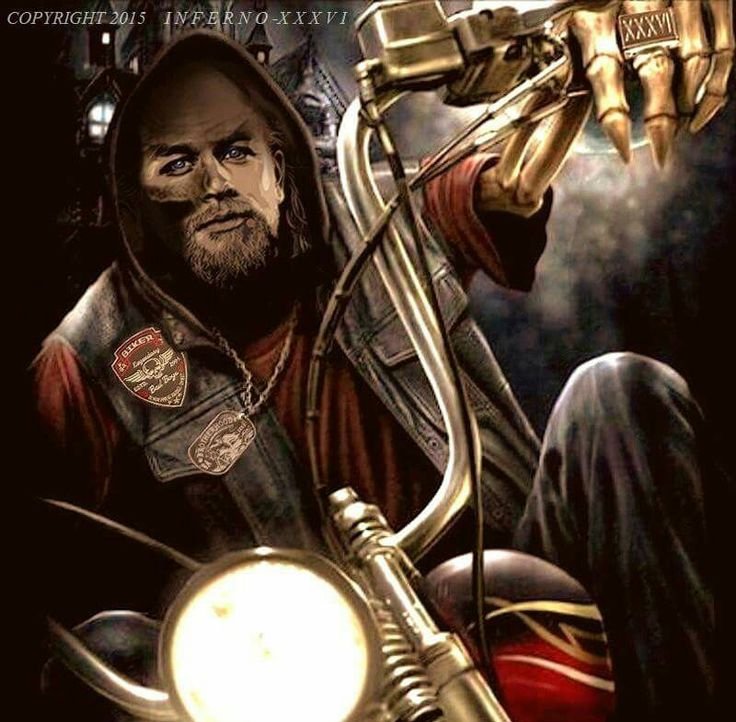
The roar of the engine, the glint of chrome, and the ever-present shadow of violence – these are the visceral hallmarks of "Sons of Anarchy." But beneath the leather vests and outlaw grit lies a far more intricate landscape, one dominated by the tortured soul of Jackson "Jax" Teller. Unpacking the Themes & Symbolism Represented by Jax Teller isn't just an exercise in literary analysis; it's a deep dive into the human condition, exploring the relentless pull between destiny and choice, loyalty and liberation, corruption and a desperate yearning for good.
Jax's journey is a grim odyssey through a moral labyrinth, where every turn presents a choice between the lesser of two evils, and the path to redemption is paved with more blood than glory. His story resonates because it taps into universal struggles: the weight of legacy, the seduction of power, the complexities of family, and the ultimate search for meaning in a world determined to define you.
At a glance: Jax Teller's Enduring Themes
- The Burden of Legacy: Jax is haunted by his father's vision for SAMCRO, constantly striving to steer the club toward legitimacy while trapped by its violent past.
- Duality and Internal Conflict: He embodies the struggle between his inherent morality and the ruthless demands of outlaw life, a true anti-hero caught between two worlds.
- Loyalty vs. Morality: Jax consistently prioritizes loyalty to his club and family, often compromising his ethical compass in the process, leading to tragic outcomes.
- The Cycle of Violence: Despite his efforts, Jax becomes ensnared in and perpetuates the very cycle of retribution and bloodshed he despises.
- The Search for Redemption: His entire arc is a quest for atonement, both for his own sins and those of the club, culminating in a poignant, self-sacrificial act.
- Fatalism and Free Will: Jax grapples with the idea that some destinies are inescapable, even as he fights to forge his own path.
The Ghost in the Machine: John Teller's Manuscript and the Inherited Burden
You can't talk about Jax Teller without talking about his father, John Teller (JT). JT is less a character and more a spectral presence, a moral compass whose shattered fragments guide – and misguide – Jax from beyond the grave. His memoir, "The Life and Death of Sam Crow: How the Sons of Anarchy Lost Their Way," isn't just a book; it's a sacred text, a constant reminder of what SAMCRO could have been and what it irrevocably became.
This manuscript symbolizes the burden of legacy. For Jax, it's not just a collection of words; it's a blueprint for a different future, a call to purify the club from the criminal enterprises that had taken root under Clay Morrow's leadership. Jax sees himself as the reluctant heir to this vision, tasked with correcting the mistakes of his predecessors. His initial motivation is simple: honor his father by transforming SAMCRO into something legitimate, something less destructive.
But here’s the rub: attempting to dismantle a deeply entrenched criminal empire from within is like trying to change the course of a river by throwing pebbles into it. The club's very identity is tied to its outlaw status, its brotherhood forged in illegal activity. JT's ghost represents the road not taken, a vision of an ethical motorcycle club that, by Jax's time, felt like a naive fantasy. The deeper Jax delves into his father's words, the more he recognizes the profound corruption, not just of his stepfather Clay, but of the very structure he inherited.
The Serpent and the Skull: Duality and the Internal Conflict
The SAMCRO patch, with its Grim Reaper wielding a rifle, is a stark visual representation of death and rebellion. For Jax, the skull itself, a classic biker motif, becomes a symbol of duality. He's a man torn in half: the caring father and loyal friend versus the ruthless outlaw president.
From the beginning, you see this internal tug-of-war. He craves a normal life for his children, especially Abel, a life far removed from the violence and lawlessness he inhabits. He's intellectual and reflective, often seen journaling or pouring over his father's words, a stark contrast to the impulsive, aggressive actions he's forced to take. This isn't just a convenient plot device; it's the core of his character. He's acutely aware of the moral compromises he makes, each one chipping away at his soul.
This internal conflict is further highlighted by his relationships. His love for Tara, a surgeon who represents a world of stability and legitimacy, constantly clashes with his unwavering loyalty to the club, which demands sacrifices she can never fully comprehend. He's always trying to reconcile these two irreconcilable parts of himself, often failing spectacularly. The symbolic struggle here is between nature and nurture, between the man he wants to be and the man his environment forces him to become.
Loyalty's Corrupting Embrace: The Unbreakable Code
Perhaps no theme is more central to Jax Teller than loyalty. It's the bedrock of SAMCRO, a code etched deeper than any law, more binding than any blood oath. Jax adheres to it with a ferocity that often blinds him, leading him to make horrific decisions in the name of brotherhood, family, or the club's perceived greater good.
Consider the early seasons: his loyalty to Clay, despite knowing Clay's treachery, stems from a deep-seated respect for the club's hierarchy and a desire to maintain order. Later, his loyalty to Gemma, his manipulative mother, becomes a destructive force, driving him to commit heinous acts in her defense. This unwavering commitment to those he considers his own, regardless of their actions, is both his greatest strength and his most profound weakness.
The irony is cruel: Jax's loyalty, intended to protect, often leads to more bloodshed, more pain, and ultimately, more betrayal. It symbolizes how even noble intentions – the desire to protect one's own – can be twisted and corrupted within a morally compromised system. He believes that by upholding this code, he is preserving the club's essence, even as it forces him to betray his own ethical standards. His choices illustrate that loyalty without a strong moral compass can be a destructive force, leading individuals down paths they might otherwise never consider. You can Learn more about Jax Teller and his complex relationship with loyalty throughout the series.
The Weight of the Crown: Leadership, Justice, and Vengeance
When Jax finally assumes the presidency of SAMCRO, he doesn't just gain power; he inherits a colossal burden. The burden of leadership becomes another major theme, symbolizing the corrosive nature of power and the impossible choices leaders must make in desperate situations. Jax quickly learns that leading an outlaw club means not just making decisions, but living with their brutal consequences.
His leadership style evolves from reluctant reformist to pragmatic, often brutal, commander. He tries to steer the club away from guns, seeking legitimate enterprises, but inevitably gets dragged back into the criminal underworld by circumstance, rival gangs, or internal strife. This struggle mirrors a common leadership dilemma: how do you implement change when the very foundation of your organization resists it?
Coupled with leadership is Jax's relentless pursuit of justice and vengeance. These two concepts often blur into one for him. When someone wrongs the club or his family, Jax doesn't just seek justice; he seeks retribution, often delivering it with disproportionate and brutal force. This is exemplified in his methodical dismantling of those responsible for Tara's death, an act of vengeance that consumes him entirely.
The motorcycle itself can symbolize this pursuit. Jax on his Harley isn't just transportation; it's a vehicle for his will, a symbol of freedom and raw power, but also of the unstoppable momentum of his vengeful quest. His final ride is the ultimate expression of this, a conscious choice to become a symbol of his own justice, riding into destiny on his terms. The road he travels is paved with his choices, each one leading further into the moral gray.
The Cycle of Violence: A Tragic Inheritance
One of the most profound and heartbreaking themes in Sons of Anarchy is the inescapable cycle of violence. Jax dedicates his life to breaking this cycle for his sons, striving to remove them from the chaos and bloodshed that defined his own upbringing. Yet, tragically, he becomes its most potent perpetuator.
Every act of vengeance, every "clean-up" of club business, inevitably leads to new enemies, new scores to settle, new blood debts. Jax tries to rationalize these actions as necessary evils, as steps toward a greater peace, but each one pulls him deeper into the quicksand. The very "justice" he seeks becomes the fuel for further violence.
His realization of this bitter truth is one of the most poignant moments of the series. He sees that his attempts to purify SAMCRO have only cemented its bloody legacy, and that he himself has become just another casualty, another grim chapter in the club's violent history. The symbolic death of the crows picking at the bread during his final scene perfectly encapsulates this: the Sons are scavengers, their survival dependent on the spoils of death and conflict.
This theme speaks to the insidious nature of inherited trauma and systemic violence. Even with the best intentions, escaping a deeply ingrained pattern can feel impossible, especially when you're caught in its current. Jax’s ultimate sacrifice, in part, is an attempt to finally break that cycle, not for himself, but for Abel and Thomas.
The Family Knot: Loyalty, Betrayal, and the Unbreakable Chains
Family isn't just blood in Sons of Anarchy; it's the club, the chosen brotherhood. But within Jax's immediate family – his mother Gemma, stepfather Clay, and his sons – the ties are exceptionally complex and often toxic. This represents the theme of family as both sanctuary and prison.
- Gemma Teller Morrow: Jax’s relationship with his mother is a volatile mix of fierce loyalty, love, and ultimately, revulsion. Gemma symbolizes the manipulative, matriarchal force that both protects and destroys. She is the embodiment of the club's darker side, willing to lie, cheat, and kill to preserve her version of family and control. Jax's inability to truly break free from her influence, even as he recognizes her destructive nature, highlights the powerful, almost primal, hold family can have. Her betrayal regarding Tara’s death is the ultimate rupture, pushing Jax beyond the point of no return.
- Clay Morrow: Jax's stepfather and former club president, Clay, symbolizes the corruption Jax fights against. He represents the club's drift from its original vision, embodying greed, violence, and betrayal. Jax's struggle to depose Clay, fueled by the desire to honor his father and protect his family, is a central conflict. Their relationship is a twisted father-son dynamic, where Jax seeks to both emulate Clay's strength and dismantle his destructive legacy.
The constant push and pull between these figures, often resulting in devastating betrayals, underscores the profound difficulty Jax faces in forging an honest path. He’s bound by blood and by an outlaw code that prioritizes family above all, even when that family is rotten to the core. This "family knot" often chokes his attempts at redemption, pulling him back into the very cycle he seeks to escape.
The Redemptive Sacrifice: Jax's Tragic End and Enduring Legacy
Jax Teller's character arc culminates in what many interpret as a redemptive sacrifice. Having orchestrated a bloody campaign of vengeance, broken his own code by killing a fellow president, and made peace with the inevitability of his fate, Jax chooses to end his life on his own terms. His final ride, a stark parallel to his father's death (or supposed death), is symbolic of several things:
- Acceptance of Fate: He accepts that he cannot escape the outlaw life he was born into, nor the bloody legacy he inherited and further cemented. His choice to ride into the path of an oncoming truck is a deliberate embrace of the tragic end he has earned.
- Breaking the Cycle (for his sons): By removing himself from the equation, he theoretically frees Abel and Thomas from the toxic orbit of SAMCRO. He ensures they will grow up without a father who is an outlaw, giving them a chance at a different life. This is the ultimate act of paternal love within his morally bankrupt world.
- Self-Punishment: It is also an act of self-justice, a final atonement for the myriad sins he committed in the name of the club and family. He becomes a martyr to his own cause, paying the ultimate price for his choices.
- Echoes of Hamlet: Jax’s story is often compared to Shakespeare’s Hamlet – a prince burdened by the ghost of his father, seeking revenge against a corrupt stepfather, and ultimately dying in a tragic climax. His sacrifice is a clean slate, albeit a bloody one, for the next generation.
His death on the open road, arms outstretched like Christ on the cross (a powerful visual motif), elevates him beyond a mere gang leader to a figure of tragic heroism. It symbolizes the idea that true freedom, for some, can only be found in death, especially when life has become an unbearable prison of consequence. The image of the crows feeding on bread and wine near his body on the highway further cements this symbolic weight, alluding to a dark sacrament, a final communion with his chosen destiny.
Beyond the Leather: What Jax Teller Symbolizes for Us
So, why does Jax Teller's story resonate so deeply? Because the themes and symbolism represented by Jax Teller tap into universal human experiences, even for those of us far removed from the outlaw world.
- The Allure of the Anti-Hero: Jax embodies the complex anti-hero, a character whose morally ambiguous actions are driven by understandable, often noble, intentions (protecting family, seeking justice). We're drawn to his struggle, even when we condemn his methods, because it reflects the imperfect nature of morality itself. He challenges us to question where the line between good and evil truly lies, and how easily it can be blurred by circumstance and loyalty.
- A Mirror to Our Own Morality: His journey forces us to confront uncomfortable questions: How far would you go to protect your family? What compromises would you make for a cause you believe in? Can you truly escape your past or your inherited circumstances? Jax is a magnifying glass on the concept of tragic destiny, showing us a man who fought tooth and nail against his fate, only to ultimately succumb to it, becoming the very thing he swore to destroy.
Jax Teller is more than just a character on a screen. He's a powerful symbol of the internal battles we all face: the struggle for identity, the weight of our choices, the unbreakable bonds of family, and the ceaseless quest for a sliver of redemption in a world that often demands darkness. His moral labyrinth, tragically, becomes a mirror reflecting the complexities of our own.