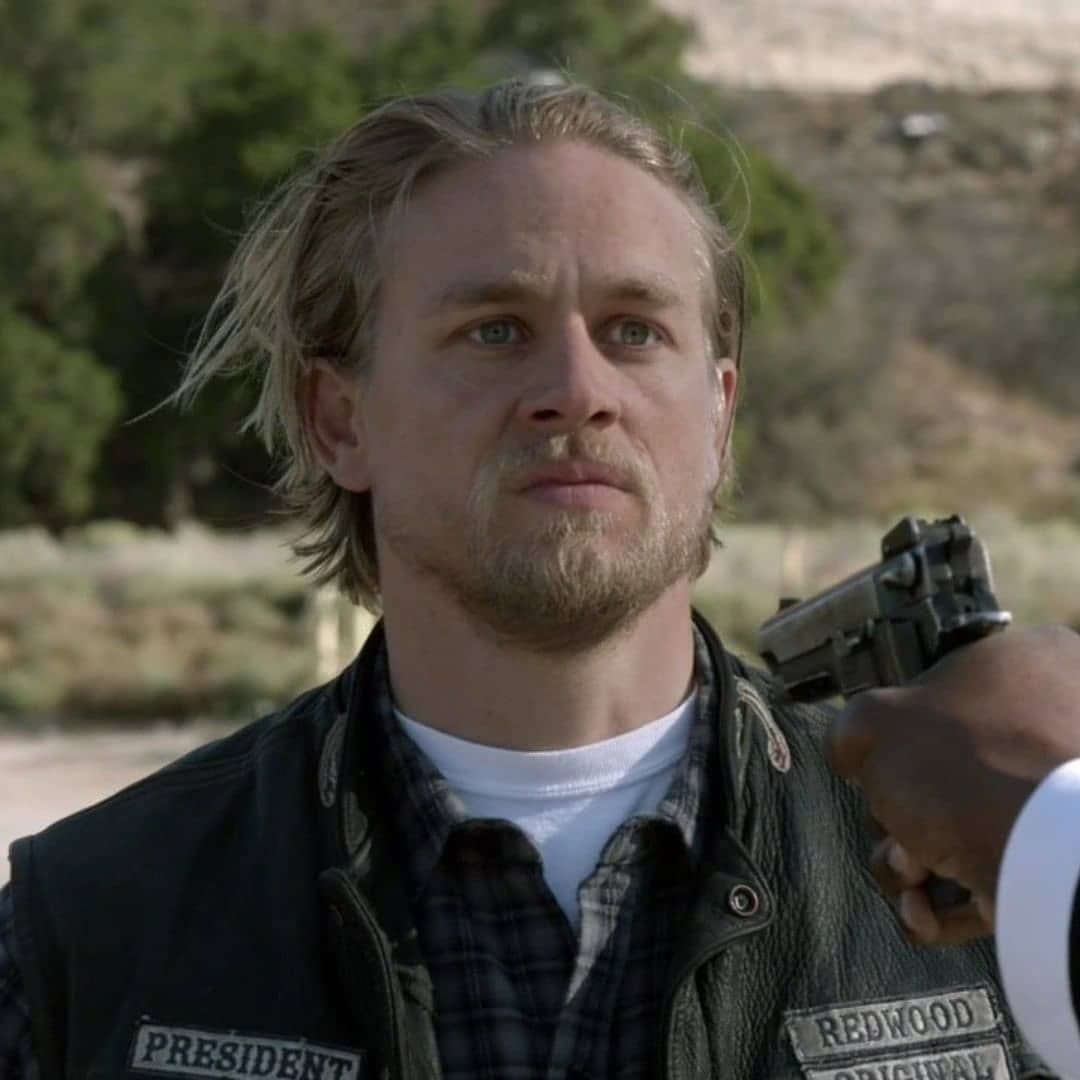
The Legacy and Impact of Jax Tellers Outlaw Life
From the moment Jackson "Jax" Teller first rode onto our screens, a ghost of Hamlet with a motorcycle club patch instead of a crown, it was clear his story wouldn't be simple. As the conflicted protagonist of Sons of Anarchy, Jax Teller’s journey is a brutal, heart-wrenching exploration of loyalty, family, and the crushing weight of an inherited life. His outlaw existence, driven by a yearning for something better while being dragged deeper into the muck, forged a legacy that continues to resonate with audiences, sparking debates and spin-offs.
You don't just watch Jax Teller; you grapple with him, questioning his choices, cheering his rare victories, and mourning his inevitable descent. His impact stretches far beyond the fictional town of Charming, embedding itself in our understanding of the anti-hero and the tragic cost of trying to change a world that refuses to bend.
At a Glance: What You'll Learn About Jax Teller
- A Tragic Hero: Discover why Jax is often seen as a modern-day Shakespearean figure, caught between noble intentions and a violent reality.
- The Weight of Legacy: Understand how his father's vision and the club's grim present shaped his internal battles.
- Leadership's Cost: Explore his presidency of SAMCRO, his attempts at reform, and the betrayals that defined his reign.
- Defining Relationships: Unpack the profound influence of Gemma, Tara, and Clay on his path and ultimate fate.
- Breaking the Cycle: Analyze his final, drastic acts and whether they achieved his ultimate goal for his sons.
- Enduring Impact: See how Jax Teller's character continues to influence pop culture and the Sons of Anarchy universe.
The Weight of the Patch: A Son's Inheritance
When we first meet Jax Teller, he's the Vice President of the Sons of Anarchy Motorcycle Club, Redwood Original (SAMCRO), a fiercely loyal, arms-dealing outlaw brotherhood in Charming, California. But beneath the denim and leather, a profound conflict is already brewing. Jax is the son of club founder John Teller, whose original vision for SAMCRO was one of brotherhood, freedom, and a life untainted by serious criminality. John's manuscript, "The Life and Death of SAMCRO," becomes Jax's moral compass, a constant reminder of what the club could be, contrasting sharply with what it had become under his stepfather, Clay Morrow.
This inheritance wasn't just a position; it was a burden. Jax was born into an outlaw dynasty, destined to wear a patch he deeply loved but also increasingly questioned. His initial desire wasn't to destroy SAMCRO but to purify it, to steer it back to its founding principles. This ideal collided head-on with the gritty, violent reality of gun running, gang wars, and internal power struggles that defined Clay's leadership. You saw in Jax a man trying to honor a legacy he admired, while simultaneously being repulsed by the methods required to maintain it.
The Outlaw's Moral Compass: Jax's Internal Struggle
Jax Teller’s appeal lies squarely in his internal conflict and moral ambiguity. He’s not a straightforward villain, nor is he a pristine hero. He’s a deeply flawed man constantly grappling with the paradox of his life: desiring to protect his family and lead his club toward legitimacy, all while engaging in the very criminal violence he seeks to escape.
Navigating the Shifting Sands of Loyalty
For Jax, loyalty wasn't a choice; it was oxygen. His life was a complex web of allegiances: to SAMCRO, to his biological family (Gemma, Abel, Thomas), and to the memory of his father. This unwavering code of loyalty often forced him to compromise his personal ethics, making decisions that were brutal but, in his twisted logic, necessary for the club's survival or his family's protection. When you witness him making a morally questionable call, it's almost always rooted in a desperate attempt to uphold a perceived higher loyalty, a testament to the suffocating grip of the outlaw code.
The Lure of Legitimacy vs. The Grip of Retribution
Jax’s vision for SAMCRO was clear: exit the gun trade, embrace legitimate businesses, and secure a future for his sons free from the club's bloody cycle. This wasn't just a pipe dream; it was his driving force, a beacon of hope in a darkening world. Yet, time and again, events pulled him back into the vortex of revenge and retribution. The death of loved ones, the betrayals, the constant threats to his family – each tragedy chipped away at his ideals, pushing him further down a path of violence. His quest for justice often led to impulsive, morally indefensible actions, showcasing the tragic impossibility of achieving peace through war.
The Burden of Leadership: President Teller's Reign
Jax's ascent to the presidency of SAMCRO wasn’t a triumphant coronation but a heavy inevitability. He took the gavel not out of sheer ambition, but out of a desperate belief that he was the only one who could save the club from itself. His leadership was a tumultuous period marked by attempts at reform, brutal pragmatism, and ultimately, a tragic mirroring of the very violence he sought to dismantle.
Steering SAMCRO: From Arms to Ambition
As president, Jax immediately set about trying to divest SAMCRO from its core business: illegal arms dealing. This wasn't an easy pivot; the gun trade was entrenched, profitable, and interwoven with the club's identity and its relationships with other charters and gangs. He explored legitimate fronts, trying to build a new financial foundation that wouldn’t rely on bloodshed. You saw his charisma and sharp intellect shine here, as he negotiated, strategized, and tried to rally a deeply ingrained outlaw culture toward a future it barely understood. This was the hope-filled Jax, the one who believed in a better way.
The Price of Power: Betrayal and Bloodshed
However, the outlaw world is a viper's nest, and Jax’s reign was plagued by betrayal, both from within and without. His manipulative mother, Gemma, and his treacherous stepfather, Clay, played significant roles in sabotaging his efforts and deepening the club's woes. Clay's eventual downfall, orchestrated by Jax, was a brutal, personal reckoning that left indelible scars. You witnessed Jax’s transformation from a hopeful reformer to a hardened leader forced to make increasingly ruthless decisions. He learned that in the outlaw world, power often came at the cost of one's soul, and that sometimes, the only way to protect what you love is to become the monster you despise. Explore Jax Tellers story to understand the full weight of these betrayals.
The Women Who Shaped His Destiny
Jax Teller's story is inextricably linked to the powerful, often destructive, women in his life. Gemma Teller Morrow and Dr. Tara Knowles represent two opposing forces, pulling Jax in different directions and ultimately sealing his fate. Their influence wasn't just emotional; it was pivotal to the narrative's tragic arc.
Gemma: The Matriarch's Shadow
Gemma Teller Morrow, Jax’s mother, was the queen of SAMCRO, a force of nature whose fierce loyalty to her family and the club was often indistinguishable from her manipulative control. Her dark secrets, particularly her complicity in John Teller's death, cast a long, poisonous shadow over Jax's life. You see how Gemma's actions, driven by a twisted desire to protect her son and the club, constantly undermined Jax’s attempts at reform, trapping him deeper in the cycle of violence. Her ultimate betrayal – the murder of Tara – pushed Jax into an irreversible spiral, demonstrating the devastating consequences of unchecked, self-serving love.
Tara: The Dream of an Escape
Dr. Tara Knowles was Jax’s childhood sweetheart and the love of his life, representing his greatest hope for a life outside the club. She was an anchor to normalcy, a doctor, a mother, and a symbol of the future he desperately wanted for his sons, Abel and Thomas. Their relationship was a constant tug-of-war between the pull of the outlaw life and the promise of a peaceful existence. Tara’s efforts to escape with her children, to give them a future free from SAMCRO’s clutches, were consistently thwarted, often with tragic consequences. Her brutal death, a direct casualty of the club's violence and Gemma's desperate actions, became the catalyst for Jax’s final, cataclysmic descent into vengeance and despair, extinguishing his last flicker of hope for redemption.
Breaking the Cycle: Jax's Tragic Sacrifice
Jax Teller's journey is ultimately a tragedy of a man consumed by the world he sought to change. His final acts weren't just about vengeance; they were about a desperate, self-sacrificing attempt to break the violent cycle for his sons.
A Father's Desperate Hope
The protection of Abel and Thomas was Jax's ultimate motivation. He saw the path they were on, mirroring his own, and knew he had to intercede. His final decisions – consolidating power, executing those he deemed threats, and systematically tying up loose ends – were all designed to create a "clean slate" for his boys. By arranging for them to be raised away from the club, by ending the gun trade, and by eliminating internal corruption, he hoped to offer them a future he could never have. It was a brutal, painful form of love, sacrificing himself so they might live free.
The Echoes of a Final Ride
Jax's final ride on his father's motorcycle, embracing his fate, is one of television's most iconic and heart-wrenching conclusions. It's a powerful visual metaphor for his full circle journey, aligning with John Teller's original vision of freedom, even if it meant a literal death. You see him accept the inevitability, burdened by the weight of his choices and the blood on his hands. His sacrifice was a deliberate act of self-immolation, a final, definitive choice to sever the generational ties to SAMCRO's violence. It leaves you wondering: did he succeed? Did his sons truly escape the shadow of their father's legacy, or will the echoes of that final ride follow them forever?
Beyond the Pavement: Jax Teller's Enduring Influence
Long after the roar of his Harley faded, Jax Teller remains a compelling figure in popular culture. His story isn't just a grim tale of bikers; it's a profound exploration of human nature, loyalty, and the corrupting influence of power.
The Unsung Hero of the Anti-Hero Age
Jax emerged during a golden age of television anti-heroes (think Tony Soprano, Walter White, Don Draper), yet he carved out his own distinct niche. He wasn't simply bad; he was good trying to be bad, or bad trying to be good, depending on the day. His internal turmoil, his flashes of noble intent amidst savage acts, made him endlessly fascinating. He represented the flawed leader, the man trying to navigate an impossible moral landscape, making him deeply relatable despite his extreme circumstances. His character sparked countless discussions about the nature of heroism, redemption, and the allure of the outlaw life.
A Continuing Saga: Jax's Legacy in Spin-Offs
The impact of Jax Teller extends directly into the Sons of Anarchy universe itself. The spin-off series, Mayans M.C., continually grapples with the aftermath of Jax's reign and the power vacuum he left behind. His decisions, his alliances, and his ultimate sacrifice still ripple through the narratives of other characters and clubs, demonstrating that while his physical presence is gone, his legacy continues to shape the world Kurt Sutter created. You see characters reflecting on his choices, learning from his mistakes, or still dealing with the consequences of his final, decisive actions, cementing his place as the central axis around which this complex universe turns.
Your Questions, Answered: The Teller Files
Jax Teller's story leaves a lot to unpack. Here are some common questions viewers often ask:
Was Jax Teller a good guy?
This is perhaps the most debated question. Jax was undoubtedly a "good guy" in his intentions – he loved his family fiercely, sought to legitimize his club, and yearned for peace. However, his actions were often violent, ruthless, and morally ambiguous. He was a product of his environment, driven by love and loyalty to commit horrific acts. It’s more accurate to call him a tragic anti-hero, embodying the duality of good intentions twisted by brutal realities.
What was Jax's greatest failure?
His greatest failure was arguably his inability to truly escape the cycle of violence, despite his desperate efforts. Each attempt to leave or reform the club ultimately pulled him deeper in, costing him Tara and ultimately his own life. He couldn't break free without a complete severing, which only came through his ultimate sacrifice.
Did Jax achieve his goal of protecting his sons?
Yes, mostly. By ensuring his sons, Abel and Thomas, were raised away from Charming and the club, Jax succeeded in giving them a chance at a normal life, free from the direct influence of SAMCRO. His final acts were meticulously planned to eliminate threats and consolidate a new, less violent future for the club, effectively making it safer for his sons to be distant from it.
What role did fate play in Jax's story?
A significant one. From inheriting his father's journal to the circumstances of his mother's manipulative actions and Tara's death, Jax often felt trapped by forces beyond his control. His story often leans into fatalism, suggesting that some destinies, particularly those inherited, are nearly impossible to outrun. His final ride feels like an acceptance of this predetermined path.
Reflecting on the Road: What Jax Teller Teaches Us
Jax Teller's outlaw life, with all its visceral highs and crushing lows, offers more than just entertainment. It's a raw, unflinching look at the human condition under extreme duress. You're left to ponder the true cost of loyalty, the corrosive nature of revenge, and the desperate hope for redemption in a world that often refuses to offer it.
His journey reminds us that sometimes, the greatest acts of love come with the greatest sacrifices. It highlights the profound influence of family and environment on our choices, and the brutal reality that good intentions can pave a road straight to hell. As you reflect on Jax's legacy, consider the choices you make, the loyalties you uphold, and the cycles you might be trying to break in your own life. Because in the end, Jax Teller's story isn't just about a biker; it's about the universal struggle to define who we are in the face of what we're given.